
Scam & Theft Loss Deductions
Cut through the noise. Stay up to date on IRS changes, tax tips, and best practices for scam, fraud, and theft-loss victims.

Scam and Theft Loss Tax Education in Plain English.
Articles on when money lost to a scam or theft may be deductible under section 165: which losses can qualify, the reasonable prospect of recovery test, which tax year applies, and the evidence file the IRS expects. The answer depends on the facts of each loss.
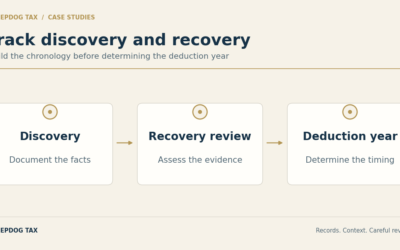
Which Year Can You Deduct a Scam Loss If Recovery Is Still Possible?
Learn how discovery, pending recovery claims, the Adkins decision, and refund deadlines affect the year of a potential scam theft-loss deduction.
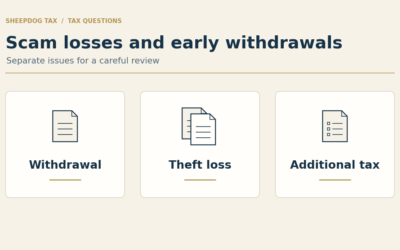
Does a Scam-Loss Deduction Erase the Early-Withdrawal Penalty?
Does a scam-loss deduction erase the early-withdrawal penalty? See how IRA taxes, withholding, Roth rules and the theft deduction interact.
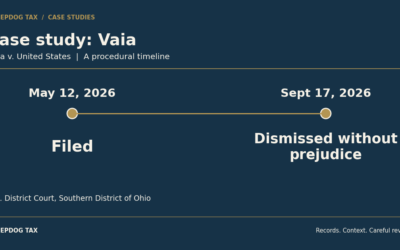
Vaia Crypto Scam Tax Case: Dismissed, but Still Worth Following
The Vaia crypto scam tax case was dismissed without prejudice. Follow the filings, unresolved theft-loss questions, and any later developments.
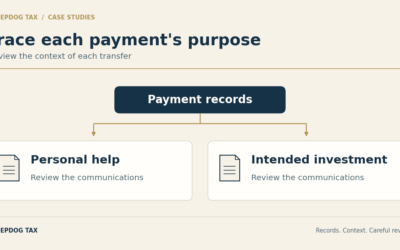
A Romance Introduction Can Become an Investment Scam. The Tax Facts Matter.
A romantic introduction can lead to investment fraud. Learn how transfer purpose, IRS footnote 16, and original records affect a potential theft deduction.
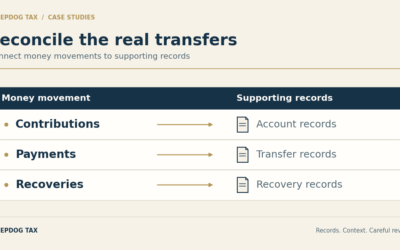
Calculating a Theft Loss When a Fake Account Shows Imaginary Gains
A fictional $840,000 scam balance becomes a $265,000 cash-loss ledger. See how payouts, recoveries, prior income, and timing affect the tax analysis.
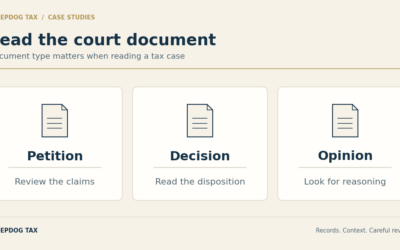
What an IRS Scam Case Settlement Means for Your Tax Return
Learn what an IRS scam-case settlement proves, how it differs from a court opinion, and which facts matter when reviewing your own tax return.
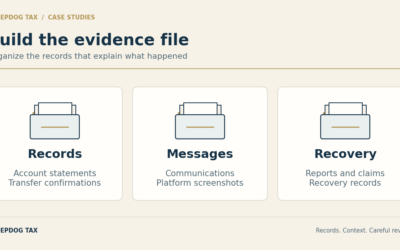
No Arrest, No Scammer’s Real Name: Building a Theft-Loss Evidence File
Build a theft-loss evidence file when the scammer is unidentified. Connect original records to purpose, basis, discovery, and recovery questions.
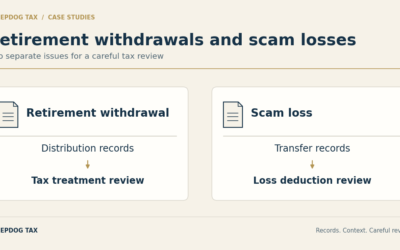
My Retirement Savings Were Stolen. Why Do I Still Owe Tax?
Retirement withdrawals and theft deductions are separate tax questions. Compare Roberts, IRS guidance, and a fictional IRA scam example.
What Documentation the IRS Expects for Theft and Fraud Losses
A theft or fraud loss file needs more than a police report and a dollar total. Before you file or amend, the file should show what property was stolen,…
Amending Returns for Loss Deductions: When It May Make Sense and When It May Backfire
Form 1040-X is a filing mechanism. It is not a strategy by itself.
What Counts as a “Transaction Entered Into for Profit” Under IRC §165(c)(2)?
For an individual, IRC 165 does not treat every stolen dollar the same way. A theft loss connected to a trade or business has one path. A personal theft…
Ponzi Scheme Losses vs. Personal Scams: Why the Tax Treatment Is Different
A Ponzi scheme loss and a personal scam loss can feel similar because both involve deception, missing money, and a victim who acted in good faith. The…
Crypto Scam Losses: When They May Qualify Under IRC §165(c)(2)
A crypto scam loss is not automatically deductible just because the platform was fake, the wallet address was controlled by a scammer, or the funds…
The “Reasonable Prospect of Recovery” Test Explained
A theft or scam loss is not deductible just because the money is gone from your account. Under IRC 165, timing depends on when the loss is sustained, and…
Can You Deduct a Scam Loss on Your Taxes? What the IRS Actually Allows
A scam loss is not automatically deductible just because the loss was real, painful, or reported to law enforcement. The most important question is…
IRC §165(c)(2) and Scam-Related Losses: What May Qualify, What Usually Does Not, and What to Document
A scam loss is not deductible just because the loss is real, painful, or reported to law enforcement. For an individual taxpayer, the key question is…